
YOUNG, GIFTED & BLACK
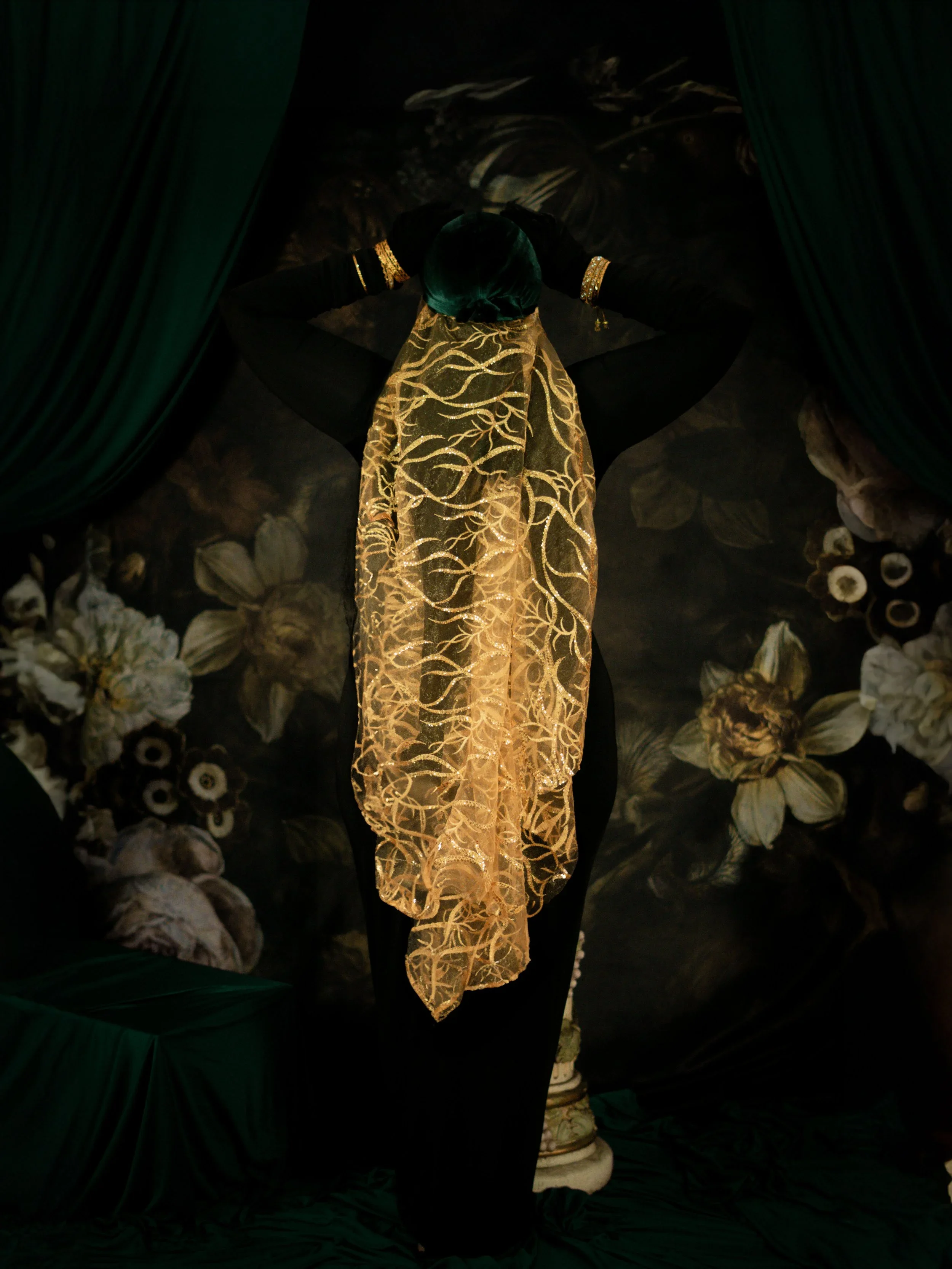
The Gift Before the Color
There is a thought that I kept sitting with while creating this photo series:
Sometimes we are talented to the world until the world finds out the color of our skin.
And sometimes people can admire what you create freely until they find out more about the person who created it.
Your race.
Your gender.
Where you come from.
What you look like.
The work itself has not changed. The idea did not suddenly become different. The craftsmanship did not disappear. The talent did not become less talented.
But sometimes the way people look at it changes.
That is what made me think about the veil.
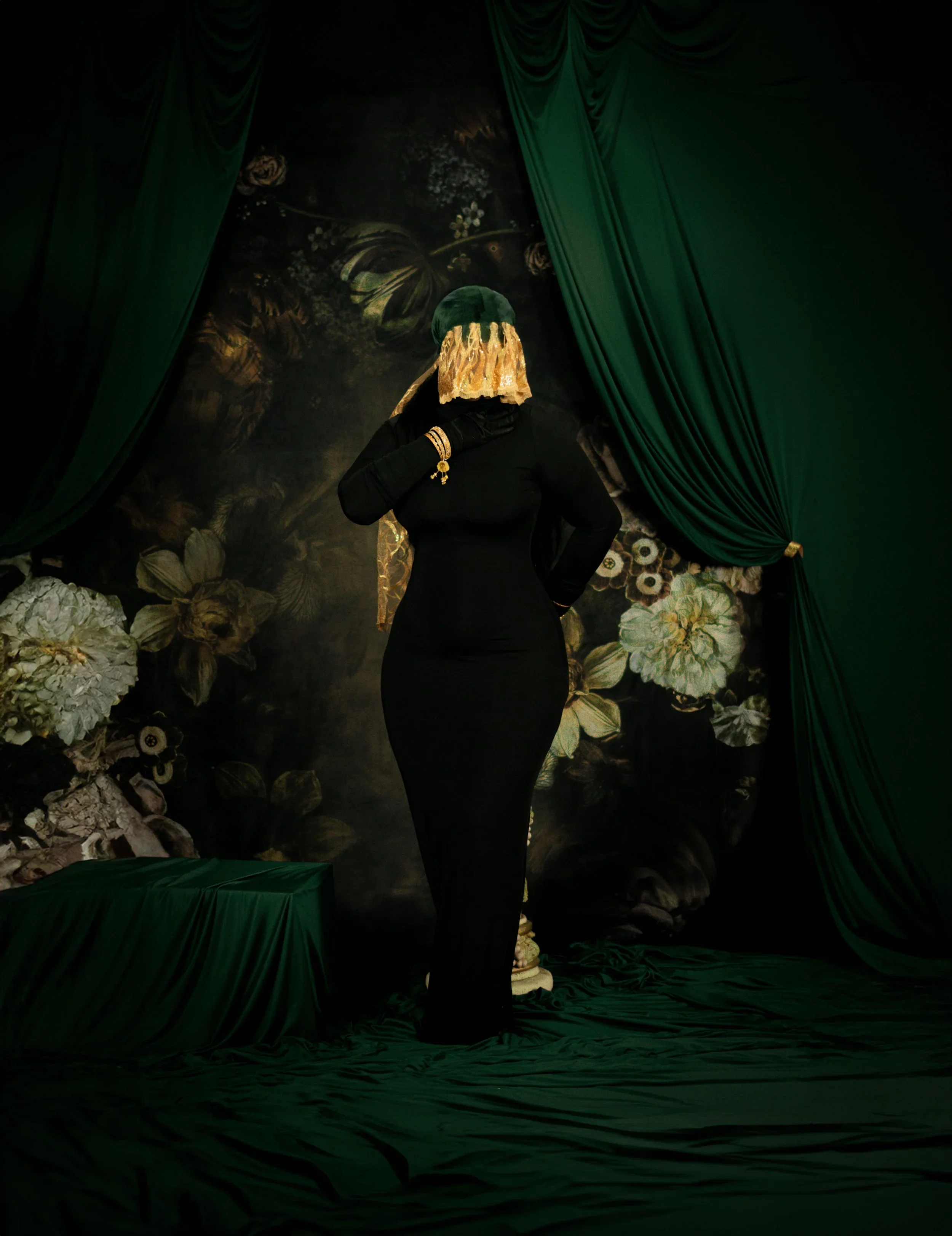
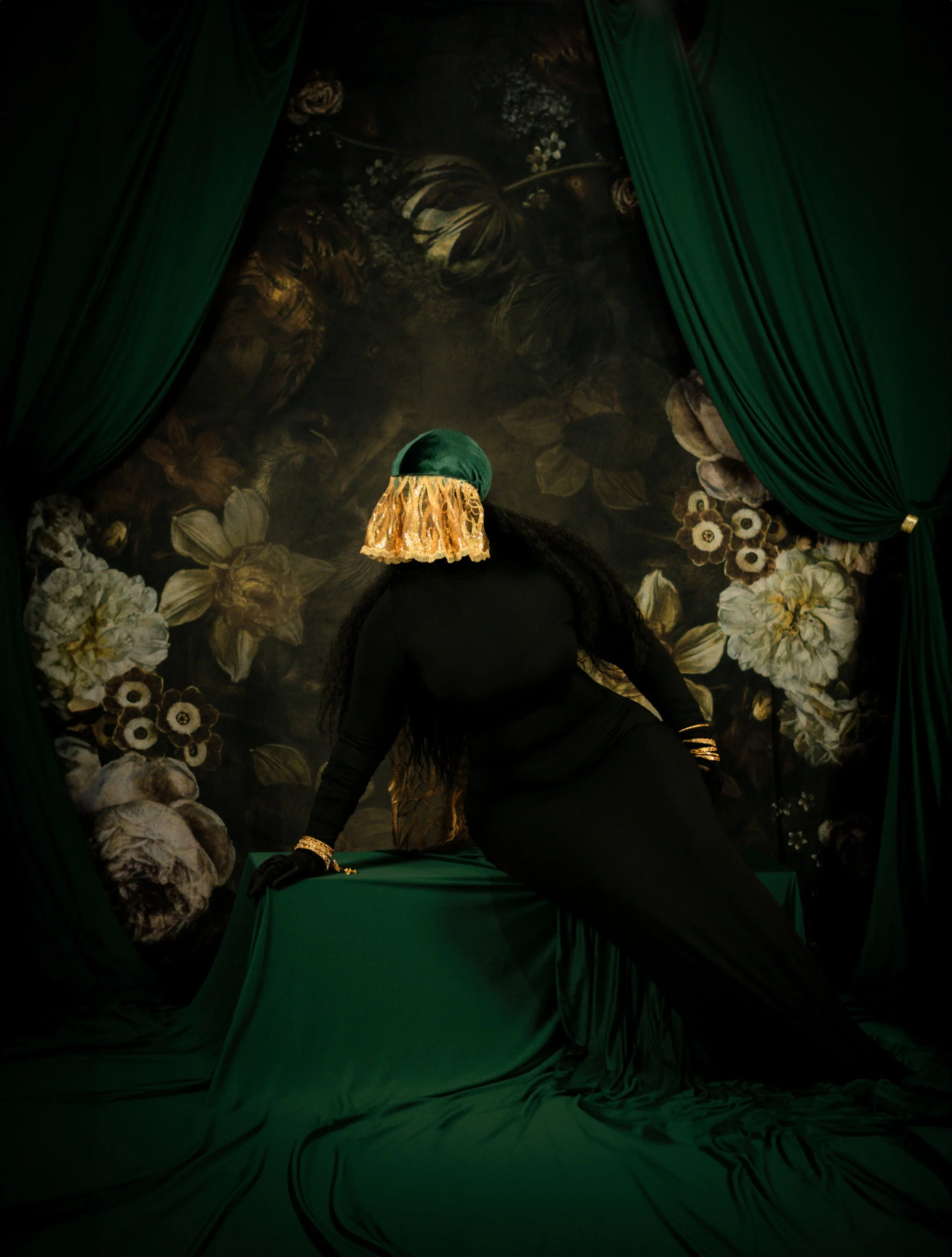
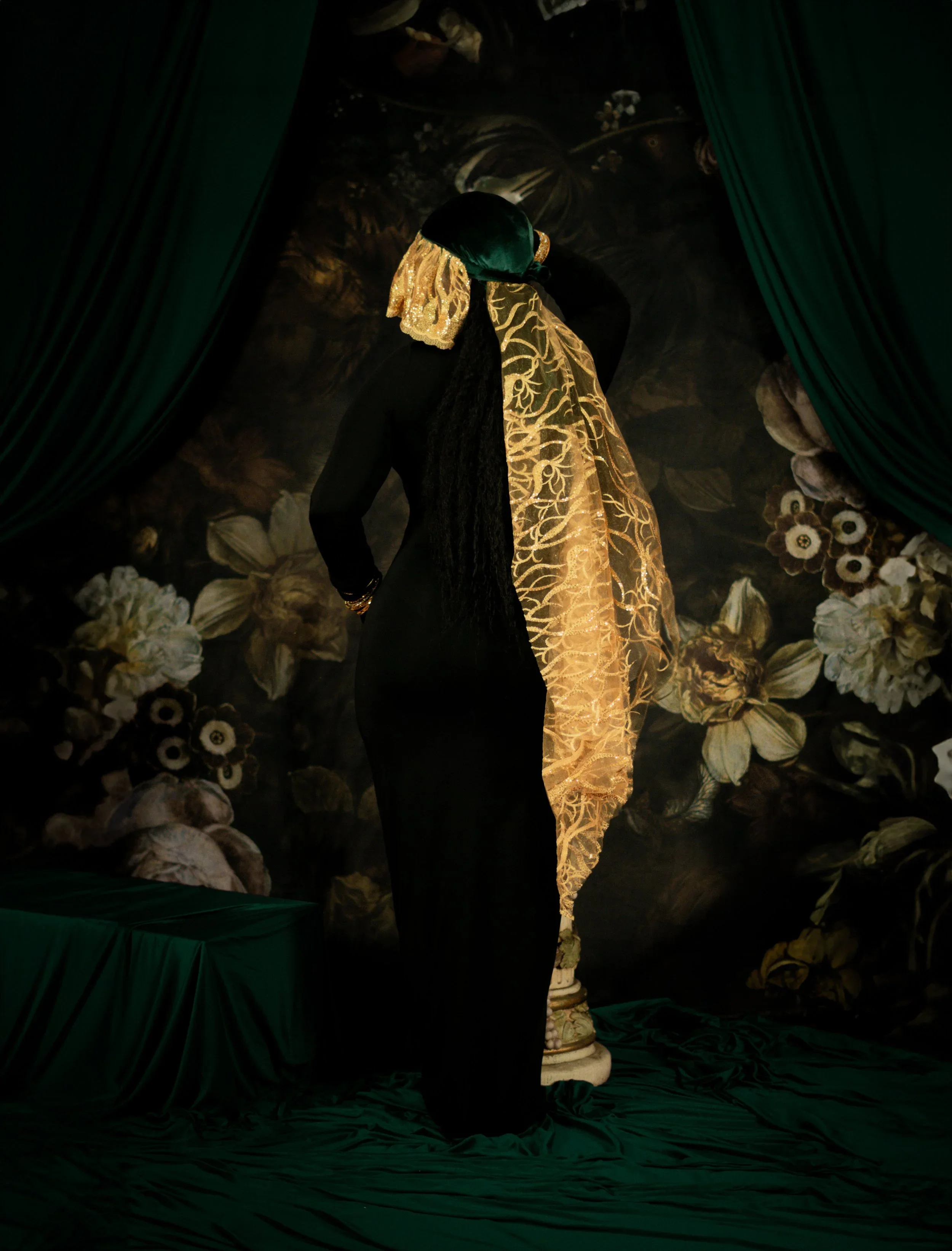
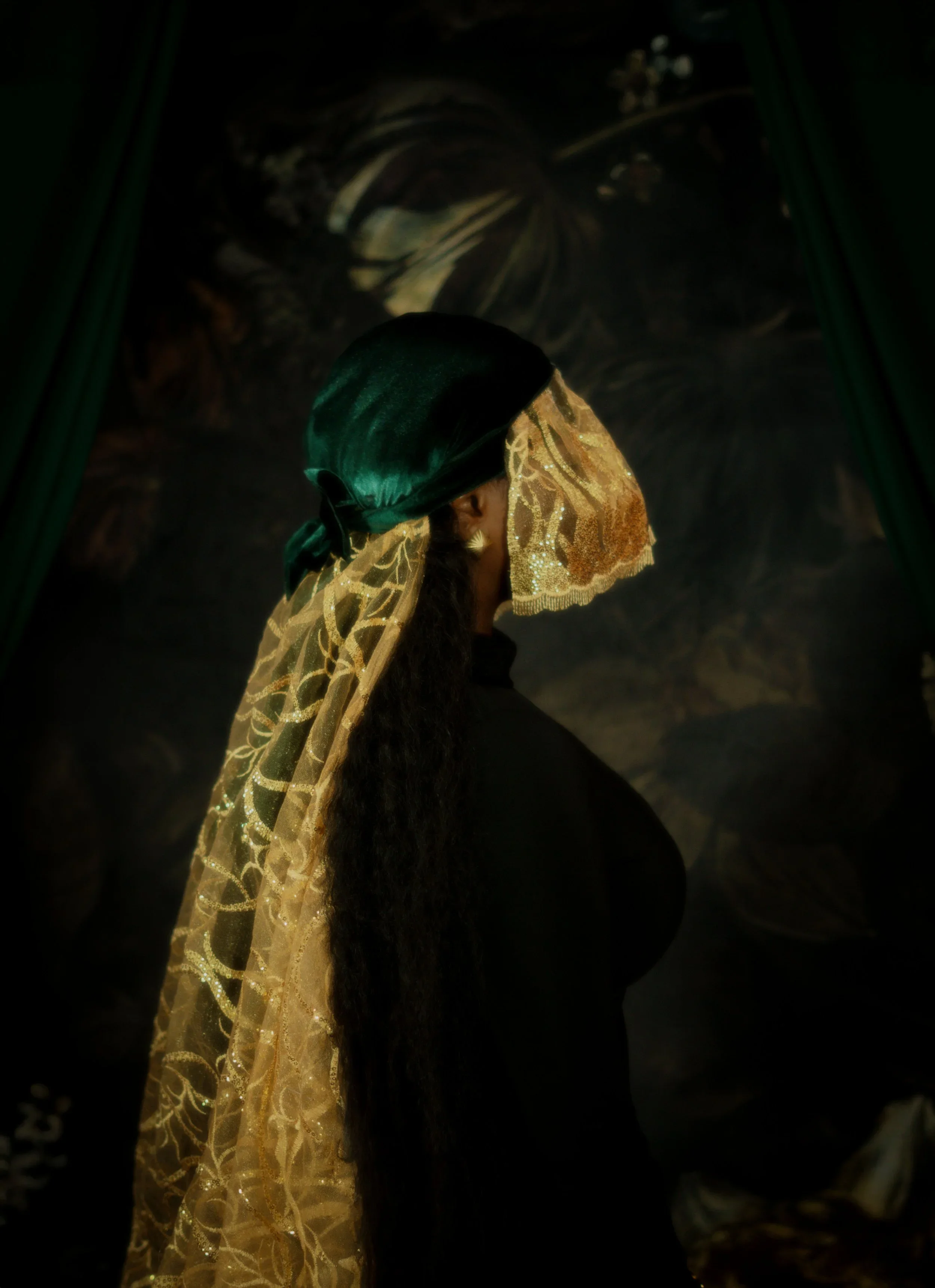
In these photographs, I chose to cover my model’s face. You can see her silhouette. You can see the velvet, the lace, the gold, the jewelry, the darkness of the clothing and the richness of the setting. Most importantly, you can see the durag.
But you cannot immediately see the woman wearing it.
That was intentional.
The veil is not there to erase her identity, and it is not there because Blackness or womanhood is something that needs to be hidden.
It is there because I wanted to change the order in which the viewer receives the image.
See the gift first.
See the design.
See the craftsmanship.
See the artwork.
Then, if you need everything else, you can look deeper.
ANONYMOUS BEFORE YOU KNEW ME
When I started AnonymousPlugs, I was a young woman entering a space that was heavily associated with men.
I saw something different in the durag.
I understood its purpose and its cultural importance, but I also felt like there was more room for it creatively. I did not want to accept that the durag had to stay within one particular stereotype simply because that was the image society had become most familiar with.
Why couldn’t the materials change?
Why couldn’t the construction change?
Why couldn’t it become more experimental?
Why couldn’t it become luxurious?
Why couldn’t it enter fashion differently?
Why couldn’t it eventually enter the same conversations we have about art?
Those questions existed in my mind long before I had all of the language that I have for the work today.
And in the beginning, something interesting happened.
People were seeing the work before they were really seeing me.
Even the name AnonymousPlugs created a type of veil without me consciously setting out to create one.
The brand was in front.
The work was in front.
The durags were in front.
My race was not the headline.
My gender was not the headline.
The work was.
Looking back, I realize how important that was.
For a period of time, people had the opportunity to respond to what I was creating before they had enough information about me to decide what box they wanted to put the person behind it in.
I did not fully understand the value of that anonymity at the time.
I understand it differently now.
Because once more people began realizing that the person behind AnonymousPlugs was a young woman creating within an industry and culture that was largely associated with men, I started noticing a shift.
Suddenly there was another layer attached to the work.
The gift had not changed.
The person carrying the gift had simply become more visible.
And I think that distinction is important.
There is something interesting about being praised while people are still able to imagine who you are.
Then the veil lifts.
Now they know.
And sometimes praise becomes judgment.
That experience made me think beyond my own situation and into a much larger history of Black people having to prove the value of what we create while also fighting the assumptions placed onto the people creating it.
THE PORTRAIT
That is part of the reason I wanted these photographs to feel like old portraiture.
The curtains.
The florals.
The dark background.
The gold.
The formal posing.
The stillness.
The richness of everything surrounding the model.
Today, taking a photograph is ordinary. We can take hundreds of pictures without thinking twice about it.
Historically, having your portrait created meant something very different.
Portraiture, particularly throughout Renaissance and early modern Europe, was heavily connected to wealth, power, family lineage and social status. Rulers, aristocrats, government officials and wealthy families commissioned portraits not simply because they wanted a picture of themselves, but because portraits also communicated importance.
A portrait could say:
I was here.
My family mattered.
My position mattered.
My life was worth preserving.
That idea of value was something I wanted inside these photographs.
I wanted the model to be placed inside the visual language of importance.
I wanted the environment around her to feel rich enough that the viewer would immediately understand that what they were looking at was meant to be treated with care.
And at the center of that image is a durag.
An object that society has so often looked at through one narrow stereotype is now placed inside the visual language of prestige.
The durag did not suddenly become valuable because I surrounded it with velvet and gold.
That is exactly the point.
It was already valuable.
The environment simply changes the way some people are willing to look at it.
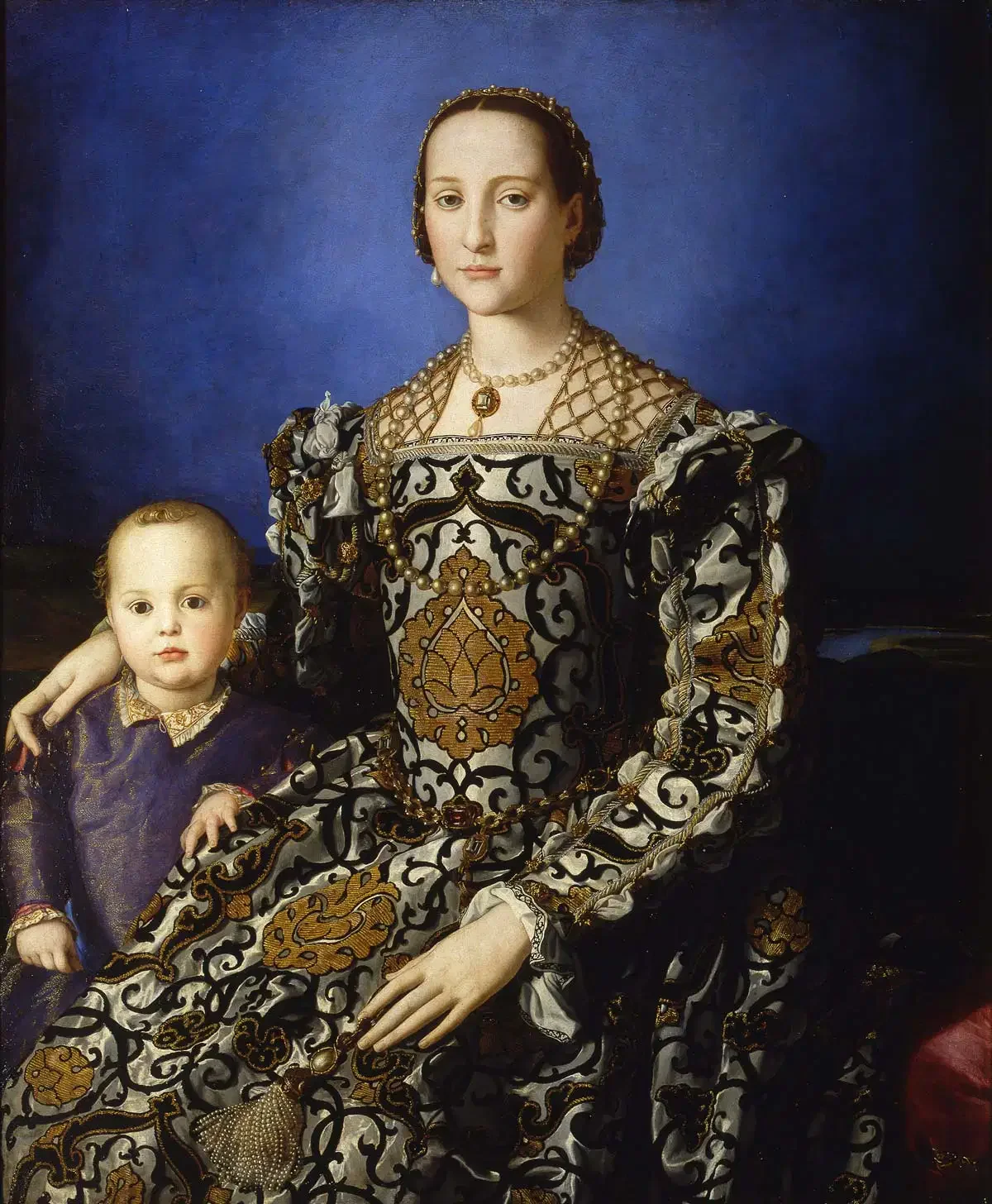
Bronzino, Portrait of Eleonora di Toledo with Her Son Giovanni, c. 1545
BEING INSIDE THE PAINTING WAS NOT ALWAYS THE SAME AS BEING THE SUBJECT
There is another part of European portraiture that is important to this conversation.
Black people existed in these paintings.
We were there.
But being visible inside the painting did not necessarily mean being the person the painting was created to honor.
Black servants, pages and attendants appeared in European aristocratic portraiture, sometimes standing beside wealthy white sitters.
Museums including the Uffizi and The Metropolitan Museum of Art have discussed how Black attendants could even function as symbols of the white sitter’s status, wealth or connection to international trade.
Think about how complicated that is.
A Black person could be visible enough to be painted but still not be the person whose life, position or importance the painting was created to preserve.
You are inside the frame.
But the frame is not really about you.
You are visible.
But you are not necessarily being seen.
That is a very different thing.
There is a portrait from 1696 in The Metropolitan Museum of Art that makes this hierarchy especially clear. A richly dressed white woman is positioned beside a Black child wearing a metal slave collar. The museum itself discusses the way the composition establishes a difference in rank between the two figures.
Both people were painted.
But they were not being presented as equals.
That history matters when we talk about representation.
Because simply appearing somewhere does not automatically mean you control how you are represented there.
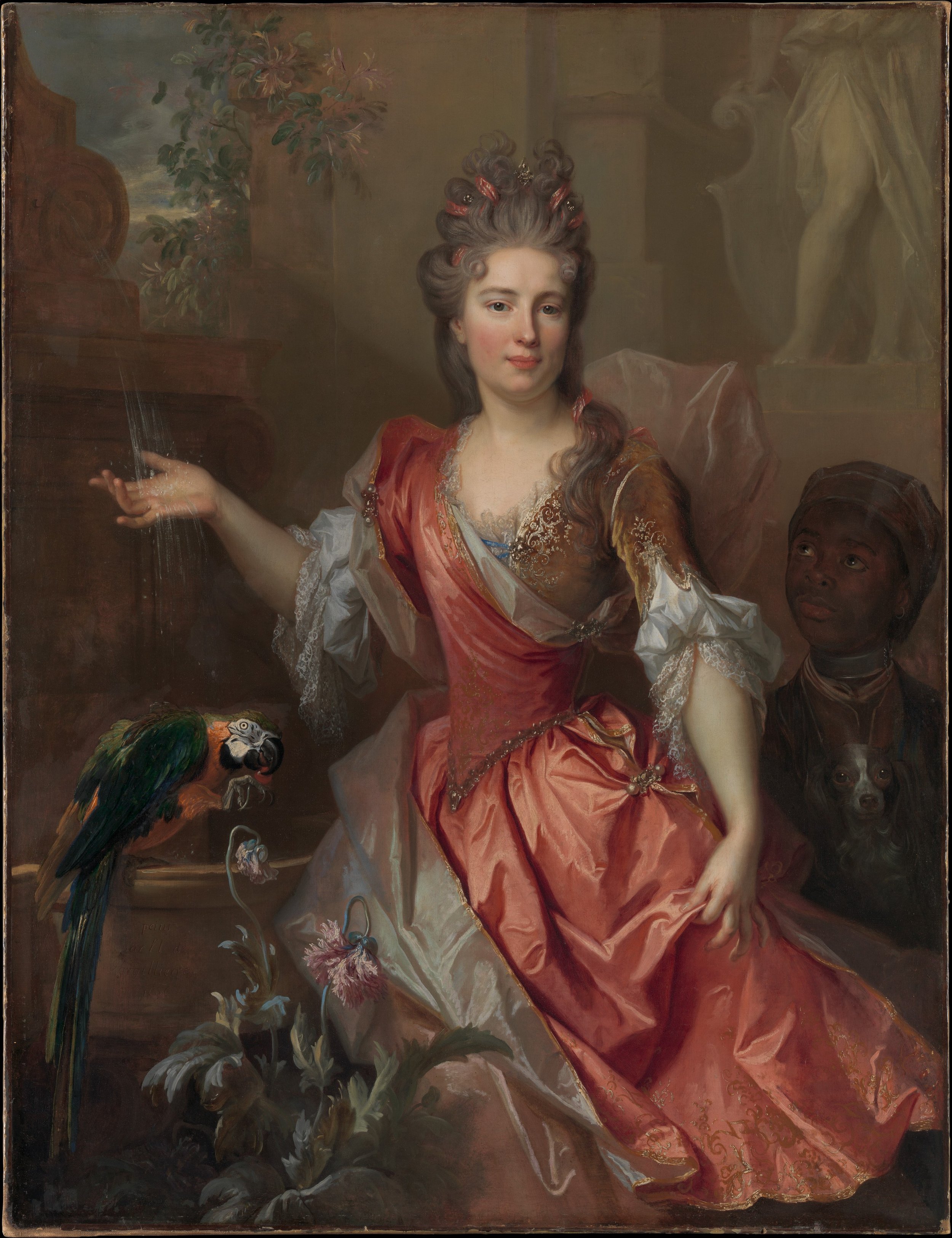
Nicolas de Largillierre, Portrait of a Woman and an Enslaved Servant, 1696
WHEN THE BLACK PERSON BECOMES THE SUBJECT
There were, of course, important exceptions.
And sometimes those exceptions tell us even more.
One example is the eighteenth-century portrait of Dido Elizabeth Belle and Lady Elizabeth Murray.
Dido was a mixed-race woman raised within an aristocratic British household, and the surviving portrait of Dido beside her white cousin has become significant because of the unusual way the two women are presented together.
Dido is not simply pushed into the distant background as an accessory to someone else’s importance.
She occupies the painting.
She has presence.
Another important example is Juan de Pareja.
In 1650, Diego Velázquez painted an extraordinary portrait of Pareja.
Pareja looks directly outward.
He has dignity.
Individuality.
Presence.
He looks like someone.
Not simply someone’s accessory.
But the history behind the portrait makes the image even more complicated.
At the time Velázquez painted him, Pareja was enslaved in Velázquez’s studio.
He would later gain his freedom and become a painter himself.
Think about the contradiction inside of that.
A man could be worthy enough to become the subject of a masterpiece and still not legally own himself.
That tells us something important.
Being recognized for beauty, talent or presence does not automatically protect someone from the systems surrounding them.
You can be admired and still restricted.
You can be talented and still stereotyped.
You can be visible and still misunderstood.
You can enter the room and still have very little control over how the room decides to see you.
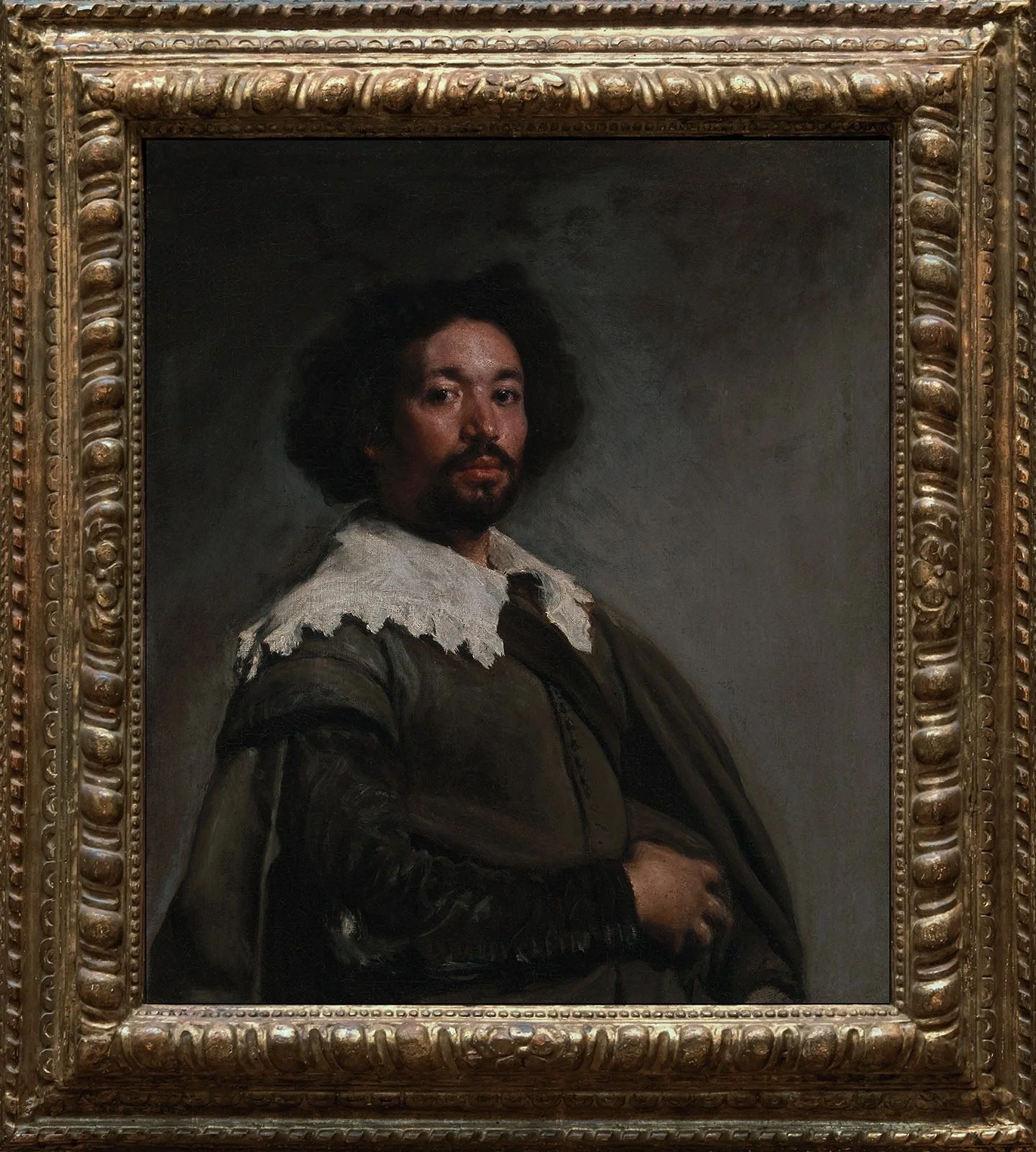
Diego Velázquez, Juan de Pareja, 1650
WHEN WE STARTED CONTROLLING THE IMAGE
But Black people did not spend history waiting for somebody else to finally represent us correctly.
We started controlling the image ourselves.
One of the clearest examples of this is Frederick Douglass.
Douglass became one of the most photographed Americans of the nineteenth century.
That was not accidental.
He understood the power of photography.
At a time when racist caricatures of Black people were common throughout American culture, Douglass understood that a photograph could challenge those images simply by presenting a dignified Black person as an individual.
In a way, the photograph became its own argument.
Society creates an image of you.
And then you create your own.
Society says:
This is what Black people are.
And you answer:
Look again.
W.E.B. Du Bois would later use photography in another remarkable way.
For the 1900 Paris Exposition, Du Bois and Thomas J. Calloway helped create an exhibition documenting Black life in the United States.
The exhibition contained photographs, books, statistics, maps, charts and other materials showing Black families, students, businesses and communities.
What I find especially important is what the photographs were doing.
They were challenging the stereotypes already circulating about Black people.
The images showed different faces.
Different complexions.
Different hairstyles.
Different classes.
Different lives.
Different people.
Not one single version of Blackness.
Not one stereotype large enough to explain an entire group of people.
More than a century ago, Black people were already fighting against being reduced before being understood.
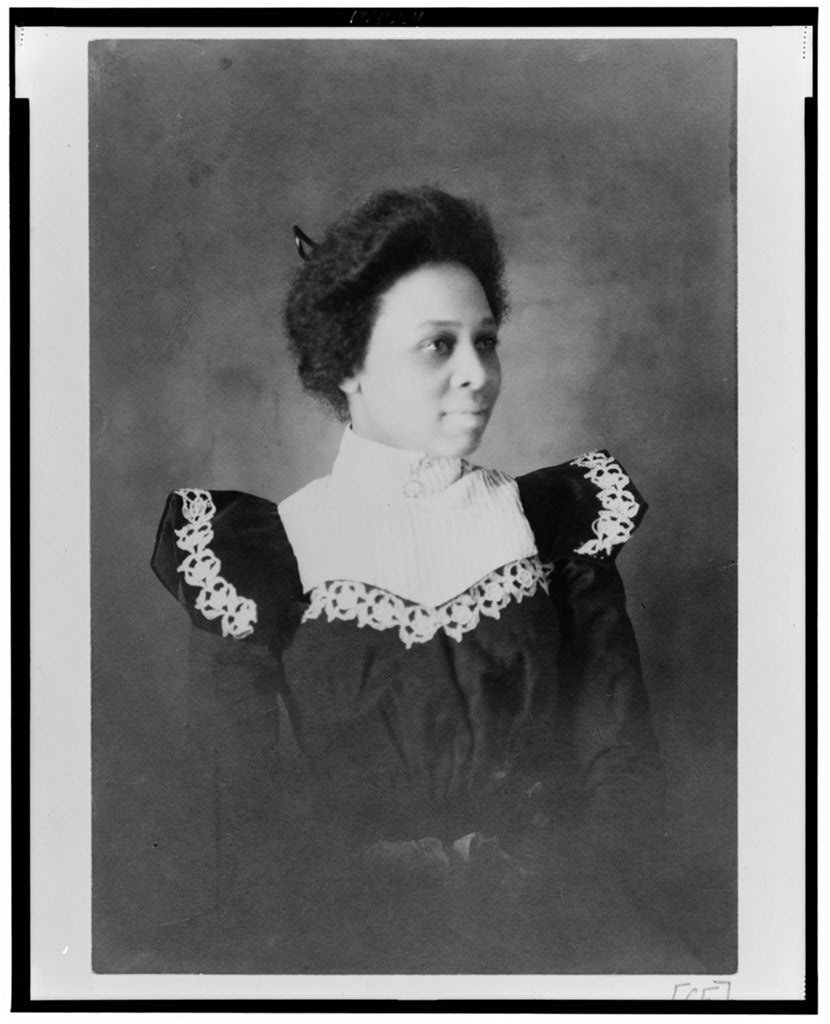
African American woman, from W.E.B. Du Bois’s 1900 Paris Exposition collection
THE VEIL
That brings me back to the veil.
W.E.B. Du Bois actually used the idea of a veil in The Souls of Black Folk.
His meaning was different from mine.
Du Bois used the veil to describe the racial separation between Black Americans and white society, along with the experience of understanding yourself while also constantly being aware of how a racist society sees you.
That idea became connected to what he called double consciousness.
In simple terms, it is the experience of being yourself while also having to constantly see yourself through the eyes of people who have already created assumptions about you.
I was not consciously referencing Du Bois when I created these photographs.
But once I began thinking about the veil more deeply, the connection became impossible for me to ignore.
The difference in this photograph is that I control the veil as the artist.
I chose it.
I placed it there.
I chose what the viewer would be allowed to receive first.
The model becomes the figure carrying that idea for me.
Her face is withheld, but her presence is not.
She is still powerful.
Still elegant.
Still visible.
Still central to the image.
The veil does not remove her from the photograph.
It changes the way the viewer is forced to look at her.
And through her, I am able to visually express something I experienced through AnonymousPlugs:
What happens when people are made to experience the gift before they are given the opportunity to judge the person carrying it?
That is the purpose of the veil.
It controls the order in which the information is received.
First, the gift.
Then the artist.
First, the work.
Then the identity.
And once the identity becomes known, nothing about the gift should suddenly become less valuable.
YOUNG, GIFTED AND BLACK
That is where Lorraine Hansberry enters this conversation for me.
Before Nina Simone sang the words, the idea of being young, gifted and Black came from Hansberry.
In 1964, Hansberry spoke to young Black writers and reflected on what it meant to be young, talented and Black.
Her words were not about asking Black people to forget that they were Black in order for the world to appreciate their talent.
They were doing almost the opposite.
They were saying that Blackness did not cancel the gift.
You did not have to become less Black to become more talented.
You could be both.
Hansberry understood that personally.
When A Raisin in the Sun opened on Broadway in 1959, she became the first Black woman to have a play produced on Broadway.
She was twenty-nine years old.
She was also the first Black playwright to win the New York Drama Critics’ Circle Award.
She was young.
She was gifted.
She was Black.
She was a woman.
And every one of those things walked into the room with her.
But imagine how incomplete Lorraine Hansberry becomes if the only thing we allow ourselves to see is Black woman.
We would miss the writer.
The thinker.
The playwright.
The political mind.
The artist.
The person.
That is what happens when identity becomes the end of the conversation instead of one part of it.
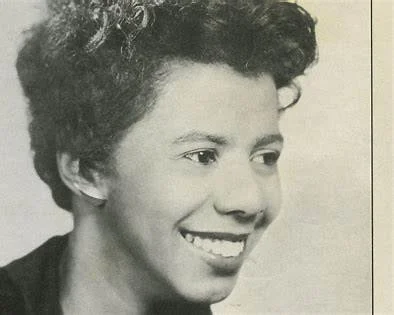
Lorraine Hansberry — 1955 portrait
Who: Lorraine Hansberry
Date: May 1955
Where it came from: Freedom, the Black newspaper where Hansberry had worked as a writer and editor. The image appeared in the May–June 1955 issue.
Original publisher: Freedom Associates, New York
NINA SIMONE AND THE BOX AROUND THE GIFT
After Hansberry died in 1965, her friend Nina Simone helped carry those words into another generation through the song “To Be Young, Gifted and Black,” written with Weldon Irvine.
It became a statement of Black pride.
A reminder to Black children that they had value.
That they had gifts.
That they had a future.
But Nina Simone’s own life also adds another layer to this conversation.
Before Nina Simone became Nina Simone, Eunice Waymon trained seriously as a classical pianist.
Her dream was to become a concert pianist.
She studied at Juilliard and later applied to the Curtis Institute of Music.
She was rejected.
Simone believed throughout her life that racism played a role in that rejection.
And then there was the way the music industry categorized her.
Simone moved through classical music, gospel, blues, folk, jazz, soul and pop.
Yet she resisted being reduced simply to a “jazz singer.”
The category was too small for the gift.
And I understand that feeling.
Not because I am comparing my career to Nina Simone’s.
But because I understand what it feels like when somebody has already created a category for the thing you are making and expects you to remain inside of it.
A Black artist does not have to become artistically smaller simply because the world prefers an easy box.
A durag does not have to become artistically smaller because the world has already decided what a durag is allowed to represent.
And I do not have to become creatively smaller because someone has already decided what a Black woman making durags is supposed to look like.
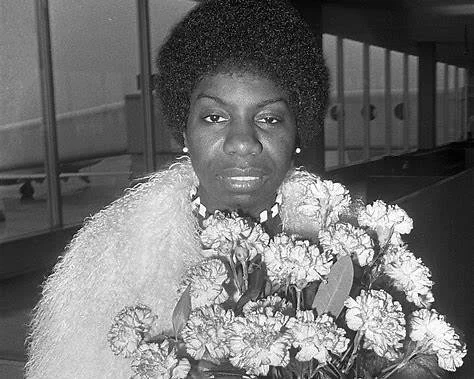
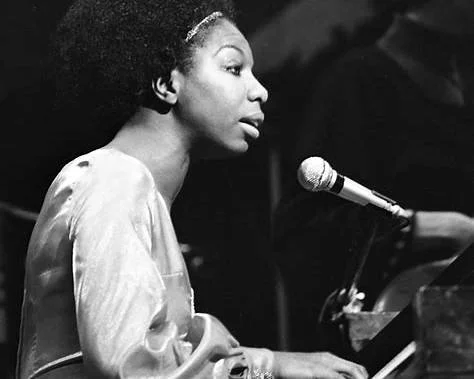
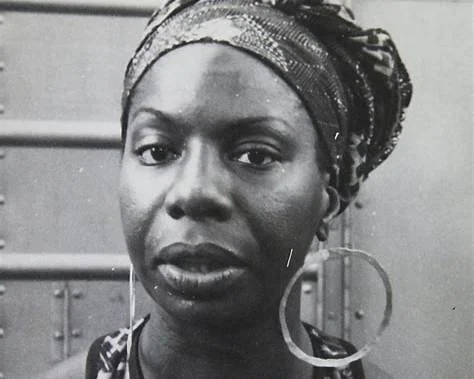
Nina Simone Holding Flowers
Schiphol Airport, North Holland, Netherlands, March 14, 1969
Photographed by Jack de Nijs / Anefo
Collection of the Dutch National Archives (Nationaal Archief).Nina Simone at the Piano
Symphony Hall, Boston, Massachusetts, 1969
Photographed by Robert HoustonNina Simone Portrait with Hoop Earrings
Late 1960s
Photographer unknown
PRIDE IS NOT THE SAME AS REDUCTION
This distinction is important.
I am not asking people to pretend they do not see color.
I do not believe pretending not to see race solves anything.
And I am not saying that Blackness should be hidden in order for talent to be appreciated.
The point is that Blackness should not become the limitation placed on everything you are willing to see afterward.
See that the woman in the photograph is Black.
But keep looking.
See that the artist behind the work is a Black woman.
But keep looking.
See that the durag belongs to Black culture.
But keep looking.
See the designer.
See the artist.
See the construction.
See the experimentation.
See the history.
See the imagination.
See everything else that can exist at the same time.
That is what young, gifted and Black means to me.
Those words belong together.
One does not cancel the others.
WHY GOLD?
The gold in these photographs is not accidental either.
Gold communicates value before I have to explain it.
Across different civilizations and periods of history, gold has been associated with wealth, status, power, sacred objects and things that people believed deserved preservation.
In these photographs, I placed gold directly across the part of my model that the viewer would normally use first to identify her:
Her face.
Before you get the identity, you get value.
That was important to me.
The green velvet, the florals, the gold jewelry, the darkness, the draping and the formal composition all place the model and the durag inside an environment that people have already learned to associate with importance.
And that creates another question.
Why should the environment have to tell you that the durag is valuable before you believe it?
Why does it suddenly feel different when it is photographed like a Renaissance portrait?
Why does lace change the vocabulary?
Why does velvet make it luxurious?
Why does gold allow someone to call it art?
Why does putting something inside a gallery, museum or expensive frame suddenly make people reconsider what it was worth before it entered the room?
The object did not suddenly become culturally valuable because I photographed it this way.
It was already culturally valuable.
What changed was the frame around it.
And that is a conversation I have been having through AnonymousPlugs for years.
THE DURAG WAS NEVER THE PROBLEM
The durag has always carried more meaning than the stereotype attached to it.
It carries function.
Protection.
Black style.
Memory.
Identity.
Community.
Creativity.
History.
So much of my work has been about asking what happens when we stop allowing someone else’s narrow understanding of an object to become the limit of what that object is allowed to become.
That is why I experiment with it.
That is why I change materials.
That is why I give it unusual construction, reflective surfaces, lace, gold, long tails, structure and movement.
That is why I place it beside fine-art references.
I am not trying to make the durag worthy.
It was never unworthy.
I am changing the frame around it so that some people are forced to recognize something that was already there.
And maybe that is why the durag and the model belong together so perfectly in this particular series.
The woman in the photograph does not need to become anything else to have value.
The durag does not need to become anything else to have value.
The photograph simply challenges the lens through which both are viewed.
WE LEARNED TO FRAME OURSELVES
That may be one of my favorite things about the history behind this project.
Black people did not simply wait for somebody else to finally recognize us correctly.
We documented ourselves.
We photographed ourselves.
We painted.
We wrote.
We published newspapers.
We created music.
We designed clothes.
We built businesses.
We created archives.
We created our own institutions.
We preserved our own stories.
Frederick Douglass understood the power of putting a dignified Black image into circulation when racist caricatures were everywhere.
Du Bois brought images of Black people studying, working, building businesses and living ordinary lives to an international exposition because he understood that representation could challenge what people thought they already knew.
Lorraine Hansberry put a Black family onto Broadway.
Nina Simone took classical music, blues, gospel, folk, jazz, anger, politics, beauty and vulnerability and refused to make herself small enough for one category.
Different people.
Different generations.
Different mediums.
But there is a question connecting all of them:
Who gets to define us?
And that same question sits inside these photographs.
I designed the durag.
I conceived the image.
I chose the setting.
I chose the model.
I chose the veil.
I chose what the viewer would see.
This time, the image is ours to construct.
SO WHY THE VEIL?
The veil is there because I wanted to interrupt the instinct to categorize.
For a few seconds, you do not get everything.
You have to sit with the photograph.
You have to notice the workmanship.
You have to notice the texture.
You have to notice the composition.
You have to notice the model’s presence.
You have to notice the durag.
You have to notice the gift.
Her hidden face is not the absence of identity.
It is a pause.
A pause before categorization.
A pause before assumption.
A pause long enough for the artwork to speak first.
That is what the model represents inside this series.
She is not supposed to be me.
She is carrying an idea that comes from my experience.
Her veil visually represents the kind of anonymity I once experienced through AnonymousPlugs—the period when people could encounter what I made before they knew enough about me to form assumptions about who they thought should be making it.
The photograph turns that experience into an image.
And when the veil eventually comes off, I hope the information that the person is Black, or female, or anything else, adds to what we understand instead of replacing everything we already understood.
That is the difference.
YOUNG, GIFTED, BLACK — AND MORE
Maybe that is what I ultimately wanted this series to say.
I am proud to be Black.
I am proud to be a woman.
I am proud of where the durag comes from.
I am proud that my work is rooted in Black culture.
None of those things need to disappear.
And the model in these photographs allows me to create a visual representation of that pride without turning the image into a literal portrait of myself.
She becomes a figure.
A subject.
A vessel for the larger idea.
She represents the person behind the gift before the world has decided what category to place that person into.
Because there are many things living inside one human being.
There is imagination.
Talent.
Discipline.
Curiosity.
History.
Failure.
Growth.
Craft.
Ideas.
Everything we have already created.
And everything we have not created yet.
We can be young.
We can be gifted.
We can be Black.
We can be women.
We can be designers.
We can be artists.
We can be all of those things at once without allowing any one of them to erase everything else.
And just like the portraits that once preserved the images of those society decided were worthy of remembering, I wanted to create my own portrait of value.
Except this time, I am behind the image deciding what deserves to sit inside the frame.
I decide the composition.
I decide the symbolism.
I decide what is revealed.
I decide what is withheld.
I decide when the veil comes off.
And behind that veil is not something that needed to be hidden.
It is something the viewer needed to learn how to see differently.
The gift.
Young.
Gifted.
Black.
And still so much more.